Whitley Bay at War: The Coast Defences
Coastal guns, anti-invasion beach obstacles, searchlight batteries, the wartime role of St Mary's Lighthouse, evacuees, and rationing on the coast -- Whitley Bay in the Second World War.
Whitley Bay in 1939 was Tyneside's playground -- a seaside resort of hotels, ballrooms, and holidaymakers. Within months, it had become part of a coastal defence line. The beaches were strung with barbed wire and anti-tank obstacles. Searchlights swept the sea. Anti-aircraft batteries were dug in behind the houses. The promenade that had hosted day-trippers now faced the threat of invasion. This is the story of Whitley Bay at war.
The Threat From the Sea
After the fall of France in June 1940, invasion was expected. Britain's entire east coast -- from Kent to Scotland -- was fortified against a possible German landing. Whitley Bay, with its long sandy beaches and easy access from the sea, was an obvious concern.
The government's response was rapid and comprehensive. In 1940 alone, over 20,000 pillboxes were built across Britain, along with anti-tank ditches, gun emplacements, barbed wire entanglements, and beach obstacles. The North East coast was no exception.
Beach Defences
Whitley Bay's beaches -- the broad sandy stretches that had drawn generations of Tyneside families -- were closed to the public and fortified. Anti-tank scaffolding was erected along the waterline: steel frames designed to rip the bottom out of any landing craft that attempted to beach. Coils of barbed wire blocked the gaps between the scaffolding.
Mines were laid in some coastal areas, and concrete anti-tank blocks -- known as dragon's teeth -- were positioned at beach exits and along the promenade to prevent armoured vehicles from moving inland.
Best for: Whitley Bay's beaches were closed and fortified with anti-tank scaffolding, barbed wire, and concrete obstacles designed to prevent a German landing.
Pillboxes and Strong Points
Concrete pillboxes were built at strategic points along the coast. These small, squat structures -- with narrow firing slits and walls thick enough to withstand small arms fire -- were manned by troops and later by the Home Guard. Some were positioned to cover the beach approaches; others guarded key road junctions and the railway line.
The wider defensive network included the Tyne Stop Line, a series of fortifications running along the south bank of the Tyne designed to halt any enemy advance from the coast towards Newcastle's industrial heartland. Whitley Bay sat in front of this line -- its defences were the first obstacle any invader would face.
The Anti-Aircraft Batteries
Whitley Bay was part of the Tyne's anti-aircraft defence network. Close behind the houses, batteries of anti-aircraft guns were positioned to engage German bombers targeting the shipyards and factories upstream at Newcastle, Wallsend, and Jarrow.
The guns were manned around the clock. When the air raid sirens sounded, the crews would track incoming aircraft using searchlights and rudimentary radar, then open fire with the distinctive crump-crump of the heavy ack-ack guns. For Whitley Bay's residents, the sound of anti-aircraft fire became a grimly familiar part of wartime life.
Searchlight Batteries
Searchlight batteries were positioned along the coast to illuminate enemy aircraft for the gun crews. The beams swept the sky in arcs, probing the darkness for the silhouettes of bombers. On a clear night, the searchlights could be seen from miles away -- great white fingers reaching into the clouds.
The searchlight crews were often young soldiers or members of the Home Guard, stationed in exposed positions along the clifftops and headlands. It was cold, monotonous work, interrupted by moments of intense danger when the bombers came.
Best for: Anti-aircraft batteries behind the houses and searchlight crews along the clifftops formed part of the Tyne's air defence network.
St Mary's Lighthouse in Wartime
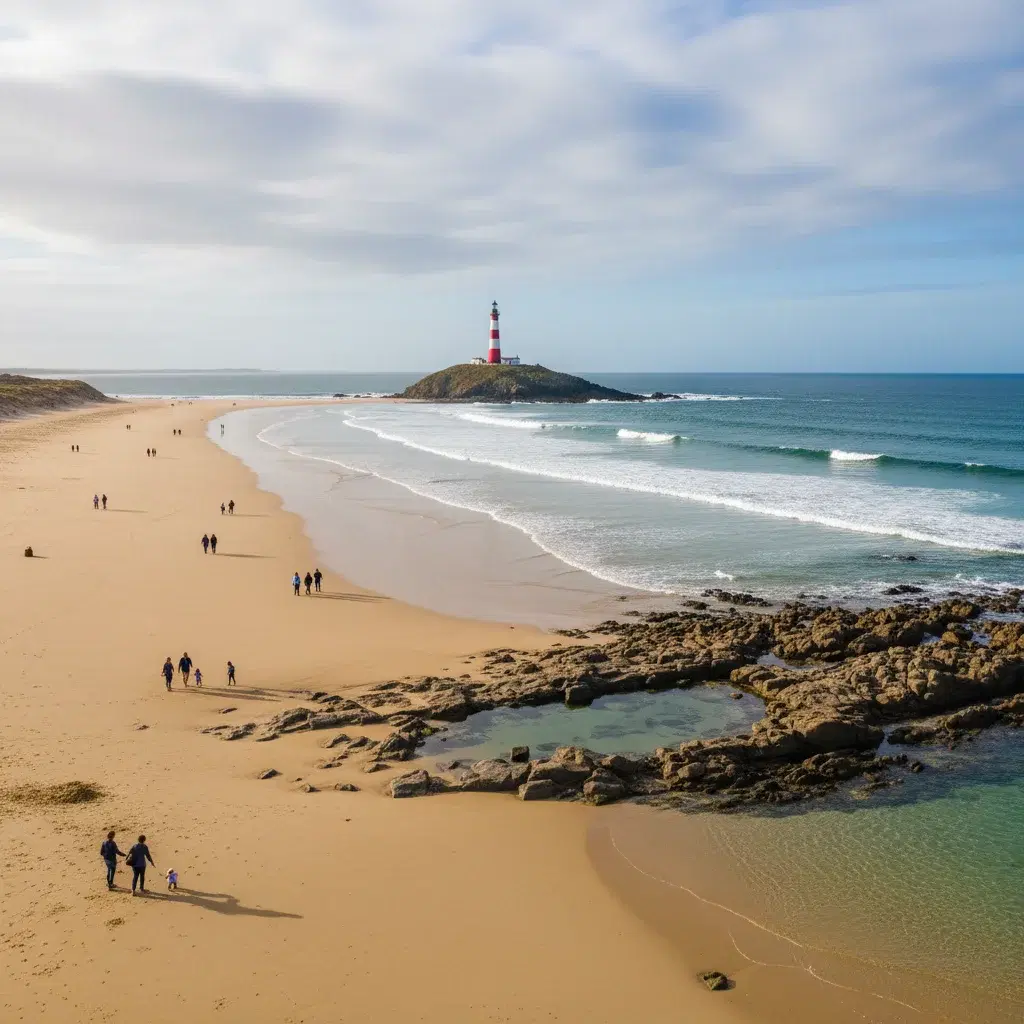
St Mary's Lighthouse, the distinctive white tower on its tidal island at the northern end of Whitley Bay, played a role in the coastal defence system. Lighthouses along the North East coast were extinguished during the blackout to prevent them from guiding enemy aircraft or submarines. St Mary's light was switched off for the duration of the war -- the first time it had been dark since it was first lit in 1898.
The lighthouse and its island were incorporated into the coastal observation network. The elevated position offered commanding views of the approaches to the Tyne, and the coastguard station was used to monitor shipping movements and watch for enemy activity.
The Home Front
Evacuees
When war was declared in September 1939, Whitley Bay was designated as a reception area for evacuees from Newcastle and Tyneside. The town's hotels and guest houses -- empty of holidaymakers -- were pressed into service to house the displaced families. Children arrived by the trainload, labelled and carrying gas masks, to be billeted with local families.
The irony was not lost on anyone: Whitley Bay, the town people came to for pleasure, was now the place people came to for safety. The Spanish City funfair fell quiet. The ballrooms were closed or repurposed. The promenade was blocked with barbed wire.
Rationing
Rationing hit a coastal resort town particularly hard. The hotels and restaurants that had served holidaymakers could no longer obtain the ingredients they needed. Sugar, butter, meat, eggs, and tea were all rationed from 1940. Clothes rationing followed in 1941. Even the fish -- which should have been plentiful on the coast -- was affected by the dangers of fishing in mined and patrolled waters.
Whitley Bay's residents, like everyone else in Britain, learned to make do. Victory gardens appeared in back yards and allotments. The Women's Institute organised preserving, canning, and cooking demonstrations. The queues outside the shops became a defining feature of daily life.
Best for: Whitley Bay was designated a reception area for evacuees. The resort's hotels and guest houses, empty of holidaymakers, were used to house displaced families from Newcastle.
The War Memorial
The Whitley Bay War Memorial stands at the southern end of The Links, opposite the Spanish City. It is a granite cenotaph on a stepped base, surrounded by nineteen stone pillars. The memorial commemorates 258 names from the First World War and 255 names from the Second World War.
In November 1995, the four bronze plaques bearing the Second World War names were stolen. Stainless steel replacements were made and installed in time for Remembrance Day 1996, along with supplementary plaques recording names that had been omitted from the original panels.
The memorial is the focal point for the annual Remembrance Day service in Whitley Bay, when the town gathers to remember the 513 local men and women who gave their lives in two world wars.
What Remains
Most of Whitley Bay's wartime defences have been removed. The beach obstacles were cleared after the war. The pillboxes were demolished or buried. The anti-aircraft batteries were dismantled. The barbed wire was rolled up and taken away.
But traces remain if you know where to look. Concrete foundations and hard standings from gun emplacements can occasionally be spotted along the coast. The war memorial stands as a permanent reminder. And St Mary's Lighthouse -- its light restored, its wartime darkness forgotten -- still watches over the approaches to the Tyne.
The beaches are open again. The Spanish City dome gleams. The holidaymakers have returned. But for six years, this stretch of coast was a front line.
More on Whitley Bay's heritage: read our guides to the history of Whitley Bay, the rise and fall of the seaside resort, and St Mary's Lighthouse. Browse the local directory or check what's on this week.
Know something we've missed? Get in touch and we'll add it.
Never miss what’s on
Join the weekly Whitley Bay.live digest — the best events, news and local tips, straight to your inbox. Free, one email a week.
What's On
Whitley Warriors v Paisley Pirates
7:00 PM · Whitley Bay Ice Rink, Hillheads Road, Whitley Bay, NE25 8HP
Whitley Bay parkrun
9:00am · The Links, Whitley Bay, NE26 1TQ
Whitley Warriors v Kirkcaldy Kestrels
5:00 PM · Whitley Bay Ice Rink, Hillheads Road, Whitley Bay, NE25 8HP