Interesting Facts About Whitley Bay
From a pleasure dome that was once the second largest in the country to an electrified island lighthouse and a Dire Straits song, here are the stories that make Whitley Bay so distinctive.
Whitley Bay is a seaside town that grew up almost entirely in the space of a single generation. In 1861 it was a coastal village of a few hundred people; within fifty years it had a grand pleasure dome, an electric tramway and thousands of day trippers pouring off the trains from Newcastle. That fast, confident, Edwardian burst of growth left the town full of surprises. Here is a roundup of the facts that make Whitley Bay worth boasting about.
Its pleasure dome was once the second largest in Britain
The white dome of the Spanish City is the town's most famous landmark, and it earned its fame the hard way. When it opened on 14 May 1910 its reinforced-concrete dome rose around 75 feet from the ground and was, at the time, the second largest unsupported dome in the country after St Paul's Cathedral in London. It was built using the pioneering Hennebique reinforced-concrete method by the Newcastle architects Cackett and Burns Dick, and the technique was so quick that the main structure is said to have gone up in around 60 days.
Best for: Best for a genuine claim to national fame: a seaside pleasure dome that trailed only St Paul's for size.
The town was renamed to sound more appealing
For most of its history the settlement was simply called Whitley. The "Bay" was added in 1902, partly to distinguish it from Whitby further down the coast and to end the confusion of misdirected post and railway passengers, and partly because the more romantic seaside name suited a town that was reinventing itself as a holiday resort. The name Whitley itself is much older, thought to mean "white enclosure", a reference to the pale magnesian limestone that outcrops along this stretch of coast.
St Mary's Lighthouse was one of the last to be electrified
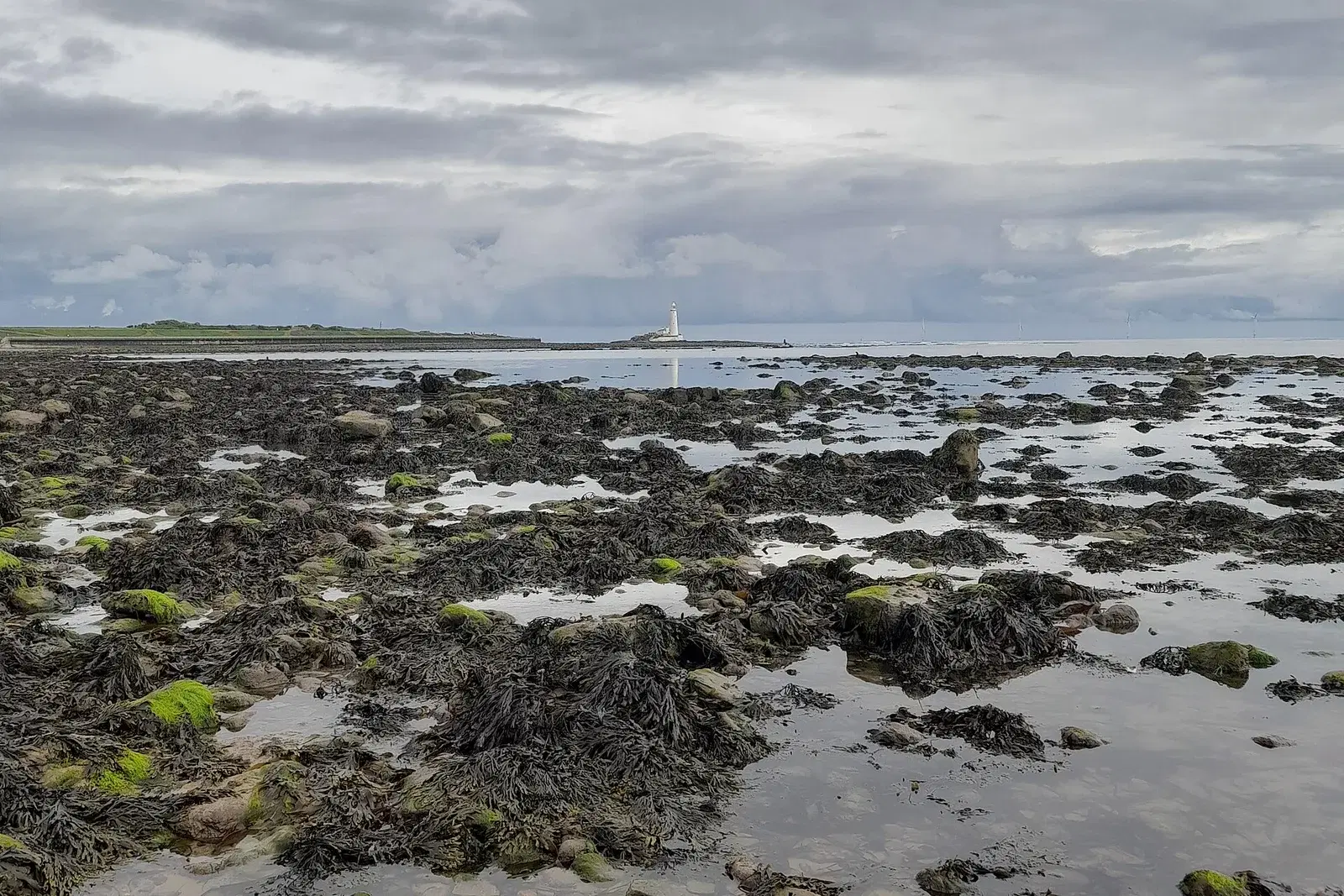
Out on its tidal island north of the town, St Mary's Lighthouse was completed in 1898 and first shone its warning to shipping in 1898. It guided vessels for nearly 90 years before being switched off in 1984, and by then it held a curious distinction: it was one of the last lighthouses in England to be converted to electric operation, having only been electrified in 1977. The island it stands on was once home to a medieval chapel, and the causeway that links it to the mainland still vanishes twice a day beneath the tide.
Best for: Best for a photograph: the white tower on its island, reached only when the tide allows.
A Dire Straits song was written about the fairground
Mark Knopfler grew up in the North East, and the Spanish City fairground left a deep mark on him. His song "Tunnel of Love", released with Dire Straits in 1980, opens with a direct nod to the Spanish City and its rides, and Knopfler has said the fairground was one of the first places he heard rock and roll played really loud. For a generation of Tyneside teenagers the waltzers, the big dipper and the dome were the sound of summer, and the song fixed all of that in music.
The station was built to impress the day trippers
When the grand Whitley Bay station building opened in 1910 it was designed by William Bell of the North Eastern Railway to make an entrance, welcoming holidaymakers arriving from Newcastle with a long glazed canopy and an elegant frontage. The Edwardian building was given Grade II listed status in 1986, still serves the town as a Tyne and Wear Metro stop, and had its canopy and footbridge fully restored in a multi-million-pound project so that arriving passengers once again see it much as the first day trippers did. A short walk away, the town's Edwardian Community Hub and Library carries on the same civic confidence of the resort's boom years.
It began life as a colliery village
Long before the deckchairs and dance halls, Whitley earned its living underground. Whitley Pit colliery opened in 1817 and was worked until 1848, and coal had been dug in the area since at least the seventeenth century. The pit closed decades before the resort boom, and it was the arrival of the railway in 1862, running working families out to the coast in under an hour, that turned a small mining and farming village into one of the North East's favourite seaside destinations.
The Playhouse has been entertaining the town for over a century
The Whitley Bay Playhouse on the seafront traces its roots back to a theatre of the early twentieth century, and it has spent more than a hundred years as one of the town's main venues for shows, films and live performance. Refurbished and reopened alongside the neighbouring pool in 2009, it remains a working theatre today, a rare survival in a resort that has lost so many of its old entertainment palaces.
The Links gave the town its wide open seafront
The wide sweep of grassland between the town and the beach, known as the Links, has always been central to Whitley Bay's appeal. It gave the resort its open promenade, its room for fairs and shows, and the long uninterrupted view of the sea that still draws walkers, families and dog owners today. It is the green stage on which the whole seafront, from the dome to the lighthouse, is set.
Frequently asked questions
Why is it called Whitley Bay and not just Whitley? The town was called Whitley until 1902, when "Bay" was added. The change helped distinguish it from Whitby on the Yorkshire coast, reduced confusion for post and railway passengers, and gave the growing seaside resort a more appealing holiday name. Whitley itself is an old name thought to mean "white enclosure".
How big was the Spanish City dome? The reinforced-concrete dome rose around 75 feet from the ground and was, when it opened in 1910, the second largest unsupported dome in Britain after St Paul's Cathedral. It was built by the Newcastle architects Cackett and Burns Dick using the Hennebique concrete method.
Can you walk out to St Mary's Lighthouse? Yes, but only at low tide. The lighthouse stands on a small tidal island reached by a concrete causeway that is covered by the sea twice a day. Check the tide times before setting out, as the crossing can be cut off quickly.
Have a suggestion? Get in touch.
Never miss what’s on
Join the weekly Whitley Bay.live digest — the best events, news and local tips, straight to your inbox. Free, one email a week.
What's On
Whitley Bay Film Festival 2026
Various · Various venues, Whitley Bay and North Tyneside (Jam Jar Cinema, The Crescent Club, Rendezvous Cafe)
Thompson Twins' Tom Bailey: Greatest Hits Tour, Playhouse Whitley Bay
7:00 PM · Playhouse Whitley Bay, Marine Avenue, NE26 1LZ
The Ultimate Classic Rock Show, Playhouse Whitley Bay
7:30 PM · Playhouse Whitley Bay, Marine Avenue, Whitley Bay, NE26 1LZ