The Lost Buildings of Whitley Bay
From the twin-towered Empress Ballroom to the roar of the Spanish City fairground and a string of vanished cinemas, here are the Whitley Bay landmarks that time and the demolition men took away.
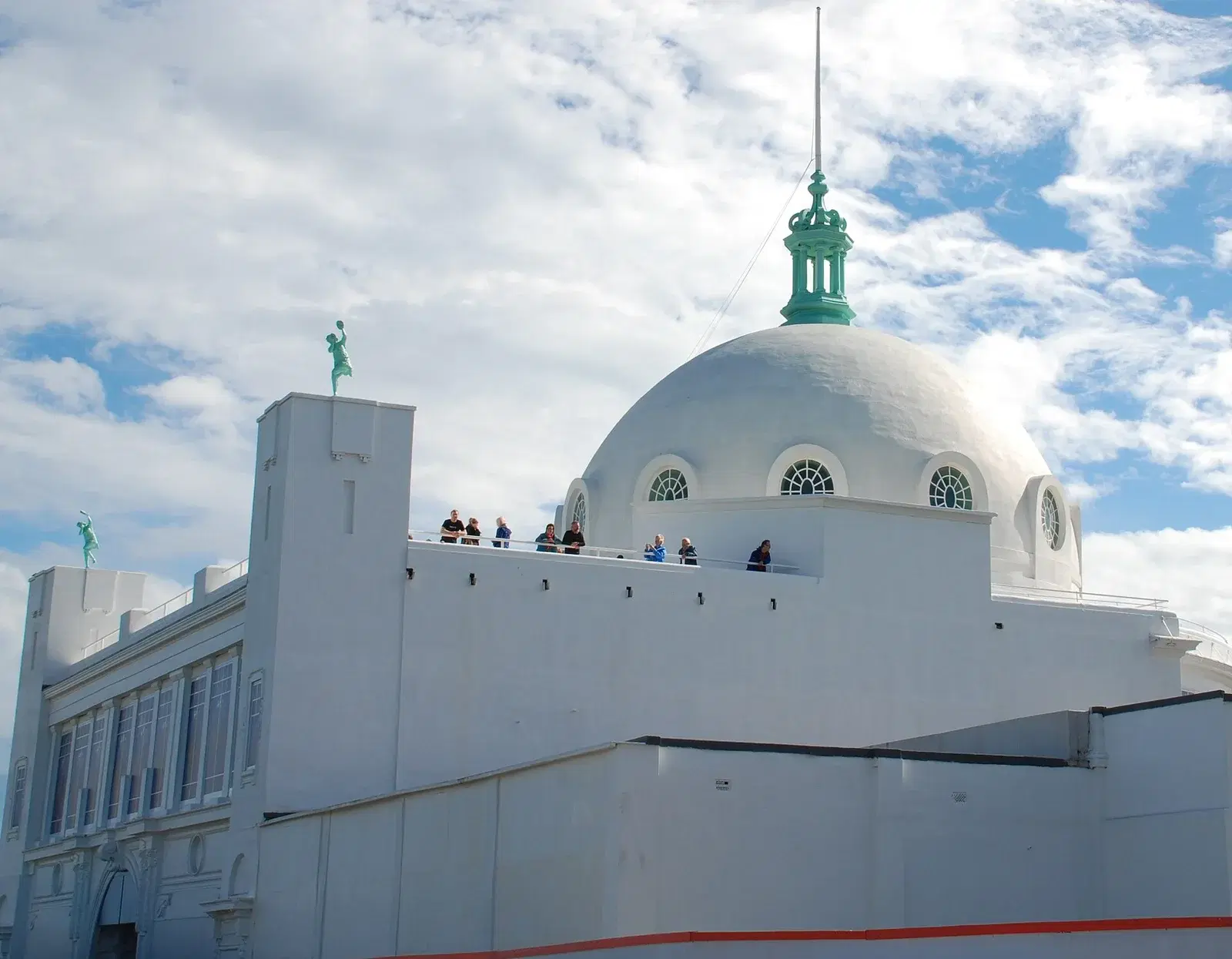
Whitley Bay was built as a place of entertainment, and entertainment buildings do not always last. The dance halls, cinemas and fairground rides that once packed the seafront were designed for the crowds of a booming resort, and when the crowds thinned many of them were pulled down. The white dome of the Spanish City still stands, beautifully restored, but around it a whole landscape of pleasure palaces has quietly disappeared. Here are some of the Whitley Bay landmarks that are now only a memory.
The Empress Ballroom
For much of the twentieth century the Spanish City complex was crowned not just by its famous dome but by the Empress Ballroom, a bright white building with twin towers topped by classical figures. The theatre that opened alongside the dome in 1910 was converted into the Empress Ballroom in 1920, and through the 1920s and 1930s it hosted major dance events and BBC broadcasts, with bands led by names such as Billy Ternent. The ballroom was demolished in the late 1990s as the site was redeveloped, taking with it one of the most distinctive silhouettes on the whole seafront.
Best for: Best remembered for: the twin white towers and the sound of the big bands broadcasting live from the coast.
The Spanish City fairground
The dome survives, but the funfair that once surrounded it does not. From the early twentieth century the Spanish City pleasure grounds filled with rides, and over the decades generations of Tyneside families came for the waltzers, the big dipper and, in the fairground's later years, Claude Cooper's Corkscrew rollercoaster. The rides were cleared and the fairground structures demolished around 1999, and the last tenant left the dome itself by 2002. The whole area stood forlorn until the £10 million restoration reopened the dome as a leisure and dining venue in 2018. The building is saved, but the roar and lights of the fairground are gone for good.
The Gaumont, once the Empire Cinema
Whitley Bay had a cinema to match its ambitions. The Empire Cinema opened in 1910 and was rebuilt in 1923 to the designs of the Newcastle firm Percy L Browne and Glover, a grand picture house for a grand resort. It was renamed the Gaumont on 28 August 1950 and ran as a cinema until it closed in 1962. Like so many cinemas it then passed through a succession of second lives, first as a bingo club, then a ballroom, and finally as Sylvester's nightclub, before it was finally demolished in 2009.
Best for: Best remembered for: nearly a century as the town's picture palace, dance hall and nightspot rolled into one.
The Pavilion Electric Theatre
Not every loss came slowly. The Pavilion, an early cinema run by Whitley Bay Entertainments, met a sudden end when it was destroyed by fire on 20 December 1923. Cinema fires were a real hazard in the age of nitrate film, and the loss of the Pavilion was a reminder of how fragile these early entertainment buildings could be. The Whitley Bay Playhouse on the seafront is now a rare survivor of the town's long entertainment tradition, having weathered more than a century of changing fashions where so many of its rivals did not.
Whitley Hall and the old village
Some of the town's losses came before the age of cinemas and ballrooms. Whitley Hall, one of the grander houses of the old settlement, was demolished in 1902, the very year the town added "Bay" to its name and set about becoming a modern resort. As the streets, hotels and shops of the new Whitley Bay spread outwards, much of the fabric of the old farming and colliery village was swept away, leaving little to show for the settlement that stood here before the railway arrived.
Why so much was lost
Whitley Bay's vanished buildings share a common story. They were pleasure buildings, put up quickly and cheaply for a resort trade that boomed and then faded, and when the crowds moved on they became too big and too costly to keep. Fashions changed, seaside holidays gave way to cheap flights abroad, and grand halls that once held a thousand dancers found themselves half empty. The survival of the Spanish City dome shows what careful restoration can achieve, but it stands almost alone among the pleasure palaces that once lined this coast.
Frequently asked questions
When was the Empress Ballroom in Whitley Bay demolished? The theatre that opened beside the Spanish City dome in 1910 became the Empress Ballroom in 1920, with its distinctive twin white towers. It was demolished in the late 1990s during the redevelopment of the site, while the neighbouring dome survived and was later restored.
What happened to the Spanish City fairground? The famous white dome still stands, but the surrounding funfair does not. The rides and fairground structures were cleared around 1999, and the last tenant left the dome by 2002. After a £10 million restoration the dome reopened as a leisure and dining venue in 2018, but the fairground itself is gone.
Did Whitley Bay have a cinema called the Gaumont? Yes. The Empire Cinema opened in 1910 and was rebuilt in 1923, then renamed the Gaumont in 1950. It closed as a cinema in 1962 and later served as a bingo club, a ballroom and Sylvester's nightclub before being demolished in 2009.
Have a suggestion? Get in touch.
Never miss what’s on
Join the weekly Whitley Bay.live digest — the best events, news and local tips, straight to your inbox. Free, one email a week.
What's On
Whitley Bay Film Festival 2026
Various · Various venues, Whitley Bay and North Tyneside (Jam Jar Cinema, The Crescent Club, Rendezvous Cafe)
Thompson Twins' Tom Bailey: Greatest Hits Tour, Playhouse Whitley Bay
7:00 PM · Playhouse Whitley Bay, Marine Avenue, NE26 1LZ
The Ultimate Classic Rock Show, Playhouse Whitley Bay
7:30 PM · Playhouse Whitley Bay, Marine Avenue, Whitley Bay, NE26 1LZ