Photography Spots in Whitley Bay
From St Mary's Lighthouse at sunrise to the Spanish City dome at dusk, here are the best spots for photography in and around Whitley Bay.
Whitley Bay's east-facing coastline, iconic lighthouse, and restored Art Deco architecture make it one of the most photogenic towns on the North East coast. Sunrise is the headline event here, but there are strong subjects at every hour and in every season.
St Mary's Lighthouse
The lighthouse on St Mary's Island, just north of Whitley Bay, is one of the most photographed landmarks in Northumberland. Access is via a short causeway that is submerged at high tide, so checking tide times before visiting is essential. The lighthouse catches beautiful side light at sunrise -- the sun rises at roughly 90 degrees over the North Sea, so the dawn glow hits the white tower perfectly.
From the south side of the causeway, the rocky foreshore provides textured foreground for wide-angle compositions. A polarising filter helps cut glare on wet rock. In winter, dramatic skies and stormy seas add power to the scene. You can climb the 137 steps to the top of the lighthouse for panoramic views of the coast.
Best for: Arrive at least 30 minutes before sunrise for the best pre-dawn colour. Check tide times at the visitor centre website -- you cannot reach the island when the causeway is covered.
Whitley Bay Beach
The long sandy beach stretches from St Mary's Island south to Cullercoats, curving gently around the bay. A stream runs across the sand near the centre, creating reflections and leading lines. Rock ledges emerge at low tide, providing foreground interest. Early morning is best for light, but the beach also works well at blue hour when the lights of the promenade reflect on wet sand.
Spanish City
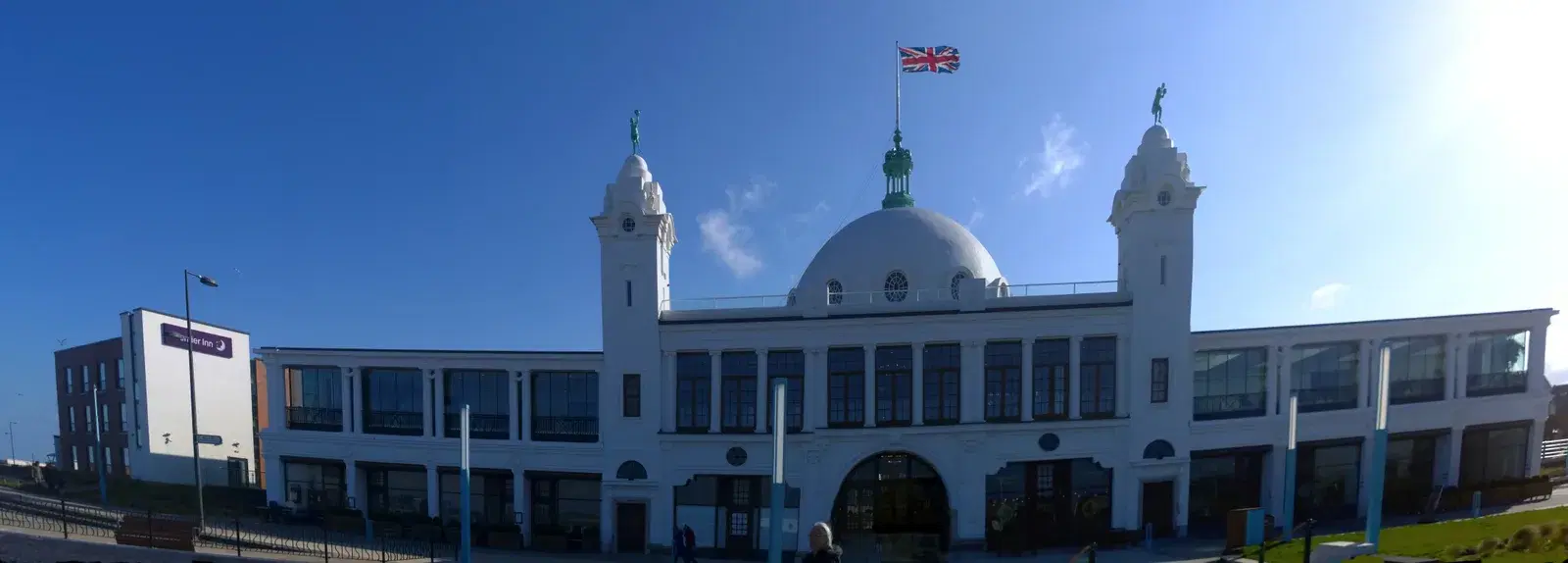
The restored Spanish City building, with its distinctive white dome and Renaissance-style frontage, is Whitley Bay's architectural centrepiece. The building opened in 1910 and was restored in 2018. Photograph it from the promenade to the south for a clean elevation, or from the beach for a wider context including the seafront. The dome catches golden light beautifully in the late afternoon. At night, the illuminated facade reflects in the wet paving of the plaza.
The Northern Promenade and Rock Pools
Walking north from Spanish City along the promenade towards St Mary's, you pass a stretch of rocky shoreline with excellent rock pools at low tide. The pools mirror the sky and the lighthouse in the distance. Spring tides reveal the most extensive pools. The promenade itself offers elevated vantage points for sweeping seascape compositions.
Best for: Low spring tides (around the new and full moon) expose the largest rock pools. Combine with a sunrise visit for the best conditions.
Cullercoats Bay
At the southern end of Whitley Bay's beach, the horseshoe-shaped bay at Cullercoats has been attracting artists since the 19th century. American painter Winslow Homer spent time here in 1881-82, painting the fisherwomen and dramatic seas. The curved harbour walls and the Watch House on the headland frame the bay neatly. Sunrise and sunset both work well, with the bay catching light from different angles throughout the day.
Panama Dips
The rocky area known as Panama Dips, between the promenade and St Mary's Island, features natural rock formations and tidal pools. The shapes and textures of the rocks, combined with reflected sky colour at dawn, make this a favourite spot for landscape photographers. A low shooting angle emphasises the foreground geology.
The Links and Seafront Gardens
The green space behind the promenade -- the Links -- provides a different perspective. In summer, the funfair on the Links adds colour and movement for long-exposure night photography. The seafront gardens south of Spanish City offer a quieter setting with benches, planting, and views along the bay.
Have a favourite photography spot in Whitley Bay we've missed? Get in touch via our contact page.
Never miss what’s on
Join the weekly Whitley Bay.live digest — the best events, news and local tips, straight to your inbox. Free, one email a week.
What's On
10CC's Graham Gouldman: Heart Full of Songs, Playhouse Whitley Bay
7:30 PM · Playhouse Whitley Bay, Marine Avenue, Whitley Bay, NE26 1LZ
Whitley Bay v Marske United
3:00 PM · Hillheads Park, Rink Way, Whitley Bay, NE25 8HR
Whitley Bay parkrun
9:00am · The Links, Whitley Bay